How Do You Pre-Qualify a Pattern Block Sets Manufacturer Before the First Quote?
- Share
- publisher
- KIDMERRY
- Issue Time
- Nov 25,2026
Summary
A pre-qualification guide for pattern block sets buyers: the nine files to request before the first quote, how to verify EN 71 reports, FSC chain of custody, audits and coating statements, the manufacturer vs supplier vs trading company comparison, four red flags, and a quote-to-PO timeline.

A pattern block sets RFQ usually starts with a drawing, a piece count and a target FOB price. It rarely starts with the factory file folder — and that is exactly where first quotes go wrong. When a manufacturer has to guess which documents you will eventually need for customs clearance, retailer onboarding or a kindergarten tender, it protects itself inside the quote: wider tolerances, vague material calls, test costs pushed into unit prices you never agreed to. This guide is for importers, wholesalers, educational brands and retail buyers who want to reverse that order — collect the right pre-qualification files first, so the first quote arrives on comparable, checkable terms.
Before requesting your first quote for pattern block sets, ask any candidate manufacturer for nine files: a verified business licence with toy scope, EN 71 test reports matched to your exact set construction, an EC Declaration of Conformity template, FSC chain-of-custody certification, a coating safety statement covering heavy metals and formaldehyde, factory audit records (ISO 9001 or a third-party report), tooling and sample history for similar block sets, packaging and drop-test documentation, and a written scope statement tying every document to your product. Verify each file for validity, scope and sample match — a manufacturer that resists producing these before pricing is telling you how the whole project will run.
What this guide covers
Why Pre-Qualification Files Decide the Quote, Not the Other Way Round
Most buyers treat documents as a post-order task: something to collect before shipment so the freight forwarder and the customs broker have their paperwork. That sequence feels natural because those are the moments the documents are physically demanded. But in a wooden toy supply chain, the content of those documents is decided months earlier, in the quote stage, and the direction of influence is the opposite of what most buyers assume.
Consider what a quote for a 60-piece pattern block set actually contains. The price depends on the wood species call — rubberwood, beech, FSC-certified basswood plywood — because material is typically 40 to 60 percent of unit cost. It depends on the coating system, because a water-based paint with EN 71-3 migration results costs more per set than an unverified lacquer that may need retesting later. It depends on whether small parts such as pegs, tangram magnets or shape-sorter lids need dedicated small-parts testing under EN 71-1. And it depends on whether the factory can reuse existing tooling for shapes you want, or must cut new moulds and laser fixtures whose amortisation lands somewhere in your unit price.
Every one of those cost drivers is documented somewhere in the factory's file cabinet. The EN 71 report names the materials tested. The FSC certificate states which product categories can legally carry a chain-of-custody claim — and which cannot. The audit report shows whether the painting line is in-house or outsourced, which changes both lead time reliability and the coating documents you can actually obtain. When you see these files before the quote, you can specify them into the RFQ: "EN 71-1, -2 and -3 on this exact construction; FSC claim on the beech components; coating supplier named with its own test reports." The manufacturer prices against your requirements instead of guessing them. When you do not see the files, the manufacturer prices against its assumptions, and you discover the gap at the worst possible time — after the PO is signed.
There is also a quieter reason that matters more each year: downstream buyers increasingly ask upstream. School-supply tenders in Germany, retail compliance teams in the United States, and marketplace category managers all request evidence chains that reach back to the factory floor. If your first quote is built on a factory whose files are incomplete, every later stage inherits the mess. If it is built on a pre-qualified manufacturer, the same document set serves the quote, the PO, the shipment and your customer's audit in one consistent form.
The Nine Files to Request Before the First Quote
Pre-qualification does not mean commissioning an audit tour or a consultancy engagement. It means asking for nine specific files, reading them against your specific set construction, and scoring the responses. A capable manufacturer sends most of these within two working days because they already exist in its export workflow. A trading company asks which factory they belong to. A factory that cannot produce them is either too new or hiding something — both are quote risks.
| # | File | What It Proves | Red Flags to Check For | When to Ask |
|---|---|---|---|---|
| 1 | Business licence with toy scope | Legal entity, registered scope covering toy manufacture, export qualification | Scope limited to "trading"; expired licence; entity name does not match invoice header | First contact, before RFQ details |
| 2 | EN 71-1 / -2 / -3 test reports | Mechanical, flammability and chemical migration safety for materials used in block sets | Report covers a different product family; laboratory not ISO 17025 accredited; expired report (older than the design's last revision) | Before quote, matched to your construction |
| 3 | EC Declaration of Conformity (template or issued example) | Manufacturer understands and drafts DoC under its own responsibility | Refuses to show a template; expects importer to draft it; missing Annex III elements | Before quote, with report package |
| 4 | FSC chain-of-custody certificate | Legal right to make FSC claims on the certified wood components you buy | Certificate expired; your product category excluded from scope; trademark licence number not provided for on-product claims | Before quote if you intend to market FSC |
| 5 | Coating safety statement + paint supplier reports | Water-based or compliant solvent system; heavy metals, formaldehyde and phthalates within limits | "All paints are safe" without supplier name; no per-batch traceability; coatings outsourced with no paper trail | Before quote, for every colour in your range |
| 6 | Factory audit report (ISO 9001 or third-party) | Production capability, QC process, social compliance baseline | Report older than 24 months; audit of a different factory address; critical findings unanswered | Before quote for orders above trial volume |
| 7 | Tooling and sample history for comparable sets | Experience with similar piece counts, shape complexity, sanding and tolerance levels | Cannot name any past block set project; sample photos inconsistent with claimed client list | Before quote, with the technical file |
| 8 | Packaging specification and drop-test records | Export cartons, inner boxes, ISTA or equivalent drop evidence for set-type products | No packaging engineer involvement; drop tests "done before" without records; carton spec missing ECT/BCT values | Before quote, together with freight assumptions |
| 9 | Written scope statement for the whole package | Ties every document to your exact set: model numbers, materials, colourways, piece counts | Scope letter generic; refuses to state which models the reports cover; verbal "yes, it covers" claims | Last, after all files arrive |
Two notes make this table work in practice. First, the ninth file is the one buyers most often skip and most often regret. A stack of genuine documents covering somebody else's block set is worth almost nothing; the scope statement is what converts documents into pre-qualification. Ask the manufacturer to list, in one page, which report numbers, which certificate scopes and which audit references apply to your model. Second, "before the quote" is a sequencing rule, not a veto. If a factory is missing one file — say its audit renewal is scheduled next month — a mature response is a dated commitment with the certificate number to follow, not silence. Score responses on completeness and candour, not on a binary pass.
The reading order that saves the most time
Start with file 7 (tooling and sample history), not file 1. The licence tells you a company exists; the sample history tells you it has solved problems like yours — tight-tolerance peg holes, warp control on wide plywood pieces, magnetic tangram inserts, 60-plus-piece sanding without splinter rejects. A factory with strong sample history usually has files 2 through 6 in order. A factory with a thick licence folder and no comparable samples will quote attractively and disappoint quietly.
Manufacturer, Supplier or Trading Company: How the Same Nine Files Read Differently
The sourcing word you attach to your search — manufacturer, supplier, OEM partner, wholesale vendor — is not cosmetic. The same nine files arrive with different signatures, different levels of control and different failure modes depending on who signs them. For pattern block sets, where the value is concentrated in material selection, coating control and shape tooling, this distinction has direct cost consequences. The comparison below is a decision aid: it does not say one channel is better, it says what each channel can and cannot answer for at quote time.
| Dimension | Direct Manufacturer (OEM/ODM) | Brand Supplier (with factory) | Trading Company |
|---|---|---|---|
| Signs its own EN 71 reports | Yes — reports name the factory as test sponsor or manufacturer | Yes — reports list its entity; factory listed as production site | Rarely — forwards a factory's reports and may not know their scope limits |
| Controls the coating process | Directly; can add per-batch records on request | Directly; may outsource peak-season painting with notice | No; painting happens where the factory decides |
| FSC claim responsibility | Can add your product scope via its certificate; issues trademark licence number | Same as manufacturer when the factory holds the certificate | Must relay claims between certificate holder and your brand; errors common |
| Tooling reuse honesty | Knows exactly which shapes exist; quotes new tooling precisely | Good visibility; may pad tooling quotes for margin | Weak visibility; either underestimates then surcharges, or overestimates and loses |
| Speed of the nine files | Usually 1–3 working days, complete | 2–4 working days, mostly complete | Indeterminate; often partial, waiting on factory goodwill |
| Best used when | Custom or semi-custom block sets; FSC marketing claims matter; multi-SKU programs | Standard catalogue sets with your branding; mid volumes | Simple replenishment of existing sets; no compliance claims beyond what is on file |
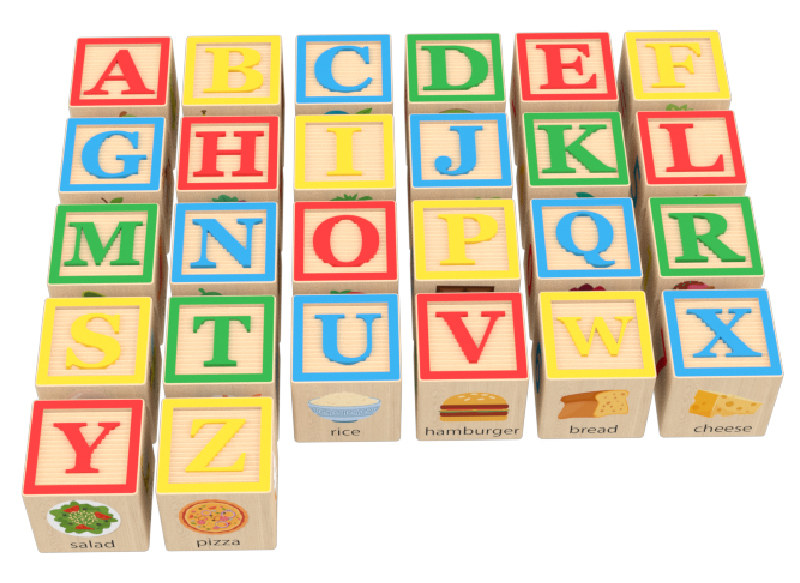
Read the table against your product plan. If your program is a custom educational block range with an FSC story — for instance a 26-piece alphabet cube line plus matching shape tiles — the direct manufacturer route pays for its slightly slower quote with control: one entity answers for wood, coating and certification, and the scope statement in file 9 is one signature. If you are buying a standard farm-themed building set for seasonal retail and adding only your logo to an existing package, a supplier or trading channel may be faster and cheaper, provided you accept that the compliance files describe the factory's standard product, not your branded variant. The mistake to avoid is channel mismatch: asking a trading company to guarantee coating traceability it cannot see, or asking a direct factory to compete with catalogue pricing built on someone else's tooling.
One practical tell: watch who answers scope questions. Send the same three questions to each candidate — "Which report covers the tangram magnets?" "Can you add my FSC scope for beech cubes?" "Which audit covers the painting line?" A manufacturer answers with document numbers. A trading company answers with promises. That single reply predicts most of what will happen after the quote.
How to Verify the Files in Five Steps
Collecting nine files is half the job; the other half is verification, which is where most pre-qualification efforts quietly fail. Documents can be real and still useless — expired, out of scope, or referring to a sample that does not resemble your set. The following sequence takes roughly one hour per candidate and can be run by one person with a spreadsheet.
- Check identity and validity first.
For every certificate and report, read the expiry date, the issuing body and the entity name. The business licence name must match the name on the EN 71 report and the DoC. An FSC certificate must be active in the public FSC database — search the certificate code, not the company name. ISO 9001 certificates can be checked on the accreditation body's register. Anything expired or unfindable gets a dated commitment or a deduction in your scorecard.
- Read report scope like a contract.
Open the EN 71 file and read three sections: the sample description (materials, construction, piece composition), the tested standards and versions, and the conclusion scope. A report that tested a 30-piece cube set does not automatically cover a set containing magnetic tangram shapes or a shape-sorter lid — new parts mean new mechanical hazards and possibly new materials. List what your set contains that the tested sample does not; every gap is a question for the quote stage.
- Match certificates to components, not companies.
FSC chain of custody applies to certified inputs flowing through controlled processes, not to everything a certified company sells. Ask which wood components in your set — beech cubes, plywood baseboards, birch tiles — can carry the FSC claim, and request the trademark licence code needed for on-product labelling. A coating statement must name each colourway in your range; "our paint system is compliant" without a colour list is half an answer.
- Spot-check audit reality.
Audit reports name an address and a production scope. Compare the address against the licence and against what the factory shows in video calls. If the audit is two years old, ask what changed since — new painting line, new workshop, new subcontractor. Ask specifically whether any part of pattern block production — sanding, coating, assembly, packing — happens at another site, because your scope statement must cover every site your product touches.
- Assemble the scope statement and score.
Request file 9: one written page listing your model numbers against report numbers, certificate scopes, audit references and coating statements. Score each candidate on completeness, response speed and honesty about gaps. Only now ask for the quote — and require the quote to reference the scope statement, so pricing and pre-qualification stay welded together.
Red Flags That Predict Quote Trouble
After running this sequence on dozens of candidates, the failure patterns repeat. Four of them show up in the pre-qualification stage itself, which makes them cheap to act on — you have not signed anything yet.
Four signals worth taking seriously
- Quote faster than files. A candidate that returns a price within 24 hours but takes a week for documents is pricing on assumptions. Either the quote is padded against unknowns, or it will be revised upward after "unexpected" test and tooling costs. Ask for the files and the quote to travel together.
- Scope hedging in writing. When the scope statement says reports "generally cover" wooden block products, or scope answers arrive by voice call instead of email, the gap between tested sample and your set is being managed rather than closed. Push for per-model listing or a clearly priced supplementary test plan.
- Certificate borrowing. An FSC or ISO certificate whose holder is a different legal entity than your counterparty is common in the trade, but it must be declared as such, with the certificate holder's consent to make claims for your order. Undeclared borrowing collapses at the first audit of your downstream customer.
- Sample-set mismatch. The golden sample you receive after pre-qualification should match the scope statement exactly — same materials, same coatings, same fasteners. If the factory substitutes "equivalent" wood or a shinier paint for the sample, the substitution entered the quote somewhere; find it before it enters the shipment.
None of these flags means disqualify. They mean re-weight your scorecard toward the questions those flags raise. A factory that hedged on scope but then proposed a concrete, priced test plan for the uncovered parts has told you something better than a factory whose files were perfect but whose answers were memorised. Pre-qualification is not a pass-fail gate; it is a structured first conversation where every answer has a document behind it.

What Pre-Qualified Pattern Block Sets Look Like in a Real Range
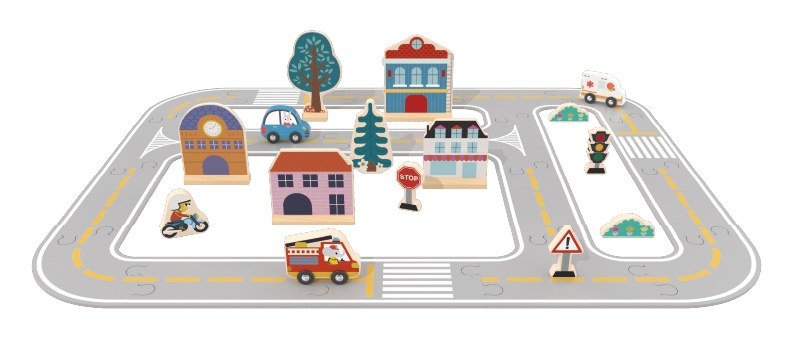
Abstractions get easier with examples. The sets below come from a working OEM/ODM pattern block program, and each one illustrates a different pre-qualification angle: material substitution, piece-count risk, magnetic components, and multi-material assembly. If you are building a comparable range, these are the product archetypes your nine files must describe.
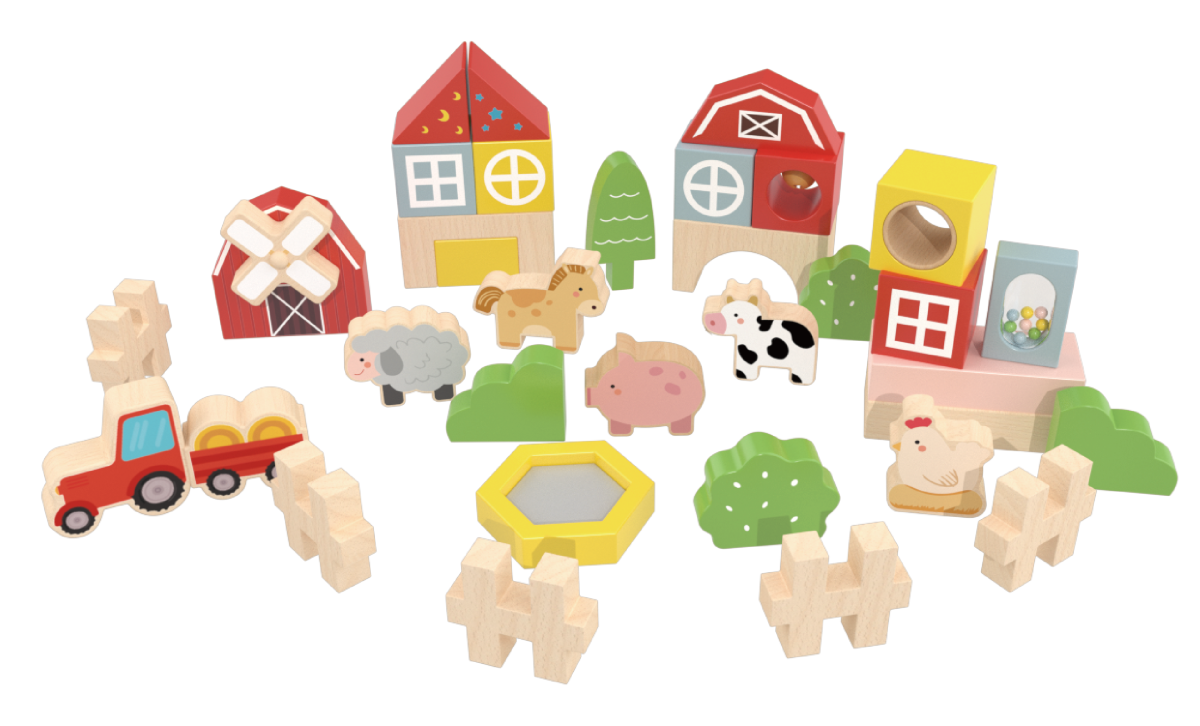

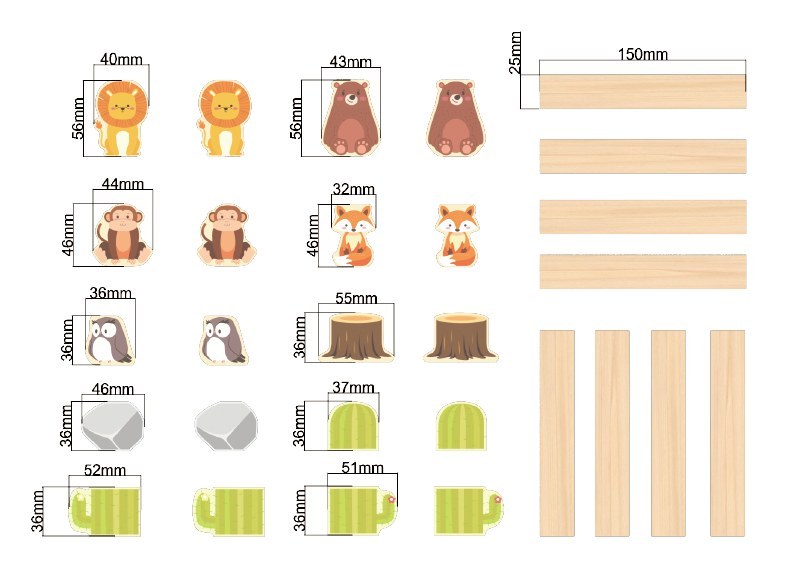
If your program mixes these archetypes — cubes, tracks, figures, magnetic tiles — resist the temptation to pre-qualify "the factory" once and assume the result transfers to every product. The factory's competence transfers; the document scope does not. Each construction brings its own test surface, and the manufacturer you pre-qualified is the one that says so plainly and prices the differences.
A Pre-Qualification Timeline from RFQ to PO
Buyers often ask how much time pre-qualification adds. Done well, it adds three to five working days to the front of a project and removes weeks from the middle, where schedule slippage is most expensive — after sampling, before production booking. A realistic calendar for a new pattern block sets program looks like this:
Working-day rhythm for a typical program
Days 1–2: Send your RFQ with the nine-file list attached; candidates acknowledge and begin collecting. Days 3–5: Files arrive; you run the five-step verification and ask follow-up scope questions. Days 6–7: Quotes return, each referencing the scope statement; you compare on identical terms. Days 8–10: Shortlist review, golden sample arrangement, and any supplementary test pricing for scope gaps. A candidate that cannot hold this rhythm at quote stage rarely speeds up after the PO — the calendar itself is a test.
The timeline also clarifies who does what. Your side owns the file list, the verification scorecard and the scope-statement request. The manufacturer owns document authenticity, per-model scope clarity and honest gap pricing. A trading company intermediary owns neither fully, which is why its projects need the scope statement to be trilateral: signed by the factory, acknowledged by the intermediary, and referenced in your PO. Whatever the channel, the principle is the same — the documents define the deal before the price defines the documents.
Related Reading
Frequently Asked Questions
What files should I request before asking a pattern block sets manufacturer for a quote?
Request the nine-file set in one message: verified business licence with toy scope, EN 71-1/-2/-3 reports matched to your construction, an EC Declaration of Conformity template, FSC chain-of-custody certificate if you intend to claim it, coating safety statements naming every colourway, an ISO 9001 or third-party audit report, tooling and sample history for comparable sets, packaging and drop-test records, and finally a written scope statement tying each document to your model numbers. Asking together signals you are a serious buyer and gets you complete answers instead of piecemeal ones.
Is a supplier's EN 71 test report enough to confirm a pre-qualified factory?
No. A genuine report proves one sample passed one scope at one laboratory. Pre-qualification asks whether that sample resembles your set — same materials, same small-parts geometry, same coatings — and whether the report holder controls the production that will make your goods. Read the sample description and tested standards, list what your construction adds, and either close the gap with a supplementary test plan priced into the quote or accept the risk knowingly. A report without scope matching is evidence, not qualification.
Can one audit file package cover several different pattern block sets?
Partially, and the split matters. The factory audit (file 6) covers the site and process, so it applies to every set produced there. But product-level files — EN 71 reports, coating statements, packaging drop tests — are issued per tested sample and material set. A 26-piece cube report does not cover a magnetic tangram set. The workable pattern is one site-level audit plus per-model scope statements listing which product files apply to which SKU, with a priced test plan for any SKU that falls outside existing scopes.
How long does factory pre-qualification take before the first quote?
For an organised manufacturer, expect one to three working days for most files and a full package within five, which aligns with a two-week quote-to-shortlist calendar for a new program. Delays beyond that are informative: a week to produce an existing EN 71 report usually means the report is being located, renewed or interpreted — all things better discovered before the PO than after. Budget three to five added working days on the front of the project and expect to recover them at sampling and production booking.
What is the fastest way to verify a manufacturer's FSC chain-of-custody certificate?
Search the certificate code, not the company name, in the public FSC database, and confirm three things: the certificate is active, the trading or manufacturing scope covers your transaction type, and the certificate holder consents to FSC claims on your order. Then ask for the trademark licence code needed for on-product labelling and check which wood components of your set can carry the claim. If the holder is a different entity than your counterparty, require that relationship to be declared in the scope statement — undeclared certificate borrowing is the most common FSC failure in wooden toy exports.
The Takeaway
Pre-qualification is not paperwork overhead; it is the mechanism that makes your first quote honest. Collect the nine files, verify them in five steps, score the four red flags, and require the quote to reference the scope statement. The manufacturer you choose on that basis will price your pattern block sets on evidence instead of assumptions — and every document you need later will already exist, in a form your customers can audit.